Canary Technologies: Reinventing the Hotel Tech Stack

The travel industry keeps bouncing back

Travel and hospitality is one of the most enduring and resilient industries in history. Driven by unbounded human curiosity and our innate desire to explore, the industry has overcome wars, recessions and most recently, a pandemic. It is also an industry that has traditionally prioritized in-person service and experience, placing technology in the backseat.

In the past decade, this focus on experience fueled the creation of B2C startups such as AirBNB, OYO and GetYourGuide who combined great customer experience with scalable tech to build massively successful companies. And while these disruptors still represent a tiny fraction of the overall travel and hospitality market, they have awoken the giants to the fact that technology can transform the guest experience while being a critical business driver. This has sparked a new wave of B2B startups that are transforming travel and hospitality sub-industries at a blazing pace: e.g. Toast* and Lightspeed in restaurants, SiteMinder and OTA Insight* in hotels and TripActions and Travelperk in corporate travel. We continue to see tremendous opportunities for more.

We are excited to announce our investment in Canary Technologies, the hotel industry’s first platform to provide extraordinary, end-to-end digital experiences from guest management to hotel operations. There are one million hotels in the world – imagine your favorite having no lines, no calling, no waiting, and no paper processes. A hotel powered by Canary offers seamless mobile check-in to breeze through the lobby upon arrival. A few clicks from your phone to order a ‘nice-to-have’ item to be waiting in the room (e.g., a bottle of champagne to bring to an event). A much-improved guest messaging experience for concierge and service requests. Payments capabilities lying underneath all those touchpoints. Canary is building the modern hotel technology stack to enable all hoteliers to deliver incredible guest experiences.

We first met Harman and SJ when they went through YC in 2018 and were blown away by their optimism, product instincts, and hotel industry expertise. They had a compelling vision for how software should transform the hotel guest experience, but also understood the quirks and challenges of selling into the hotel space (dealing with chains and brand standards, management companies, etc.). The industry is rampant with paper processes, archaic technology (e.g. the two most widely adopted property management systems are 30 and 45 years old, respectively) and a service mindset that often throws people at every problem (google “night auditor” job spec). Consequently, it takes entrepreneurs who can build trust and speak the hotelier’s language, focus on the end consumer and understand the dynamics of the many parties involved in tech buying. Harman, SJ and team have navigated the ecosystem with incredible a clear vision to bring forward the future of travel.

During the depths of the pandemic, we saw Canary conduct its business with empathy and patience, while delivering mission-critical products to help ensure hotels thrive and consumers feel safe. This care and customer focus since their founding only a few years ago has enabled Canary to be deployed at thousands of hotels and build meaningful relationships with some of the most influential hotel brands in the world. We’re honored to partner with this team on their Series A (along with our friends at Thayer Ventures and Commerce VC) and are excited to see them empower more hotels to deliver exceptional guest experiences around the globe.

* F-Prime Capital portfolio companies

Tracking the Disruptors With The F-Prime Fintech Index

The F-Prime Capital team conducts extensive primary market research on the global fintech sector. We closely track and benchmark the performance of established and emerging fintech companies, some of which belong to our portfolio of investments.

2021 was a record year for fintech investments and exits and there has never been a better time to look at the sector’s performance and take stock of the tremendous disruption that has occurred over the last 10 years.

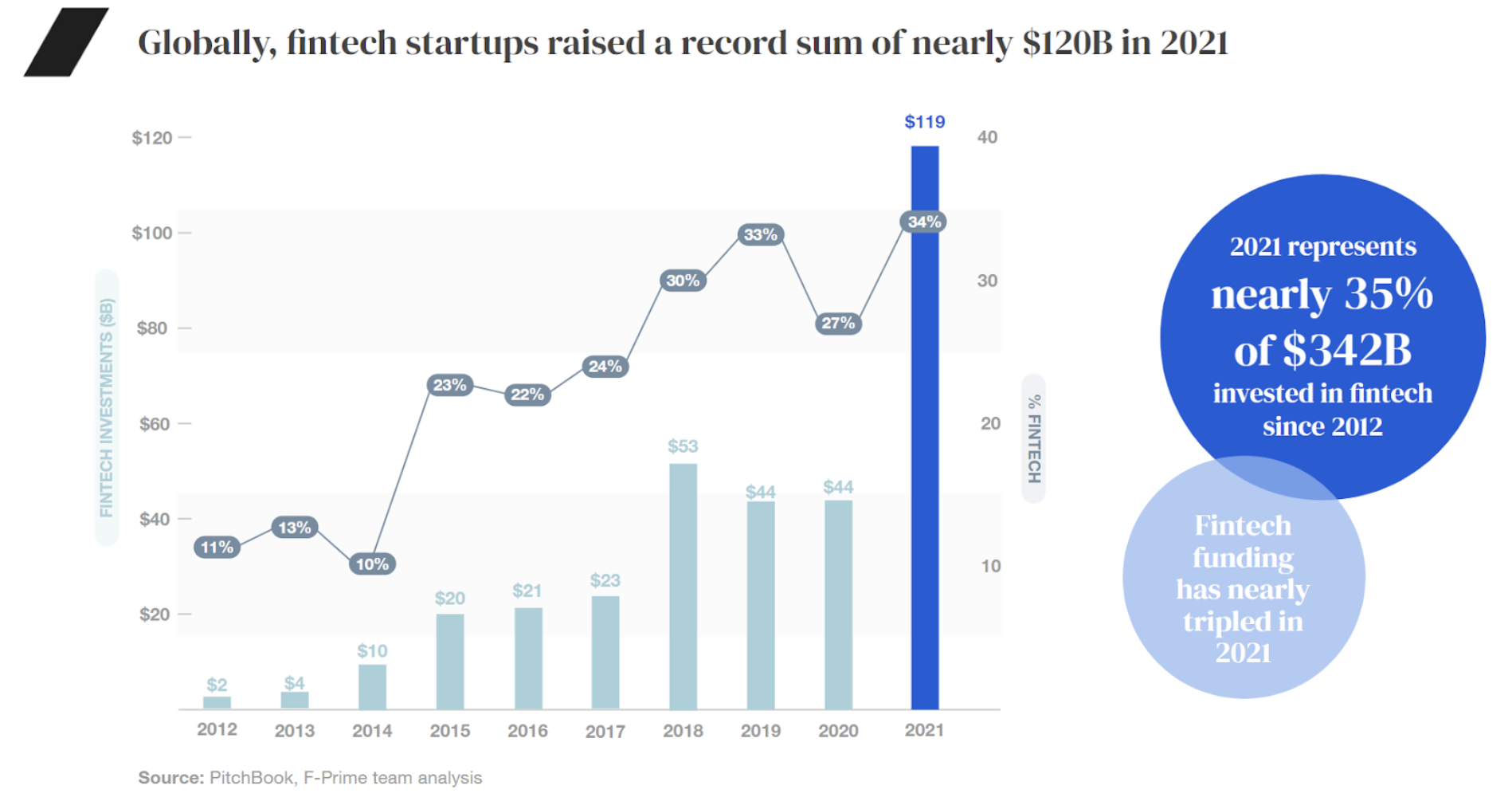
Fintech began as a sleepy niche of companies selling technology to financial institutions. Venture capital investments averaged a mere $1B per year. The last five years have seen an explosion of disruptive startups. What began as new, digital front doors to the traditional financial industry has developed into an entirely new financial infrastructure. While payments and lending were first to ignite, fintech companies have captured market share across all financial sectors, including banking, insurance, asset management, and proptech. This fintech disruption has been fueled by over $283B of venture capital since 2015, including nearly $120B in 2021 (35% of decade’s fintech venture investments).


The F-Prime Fintech Index

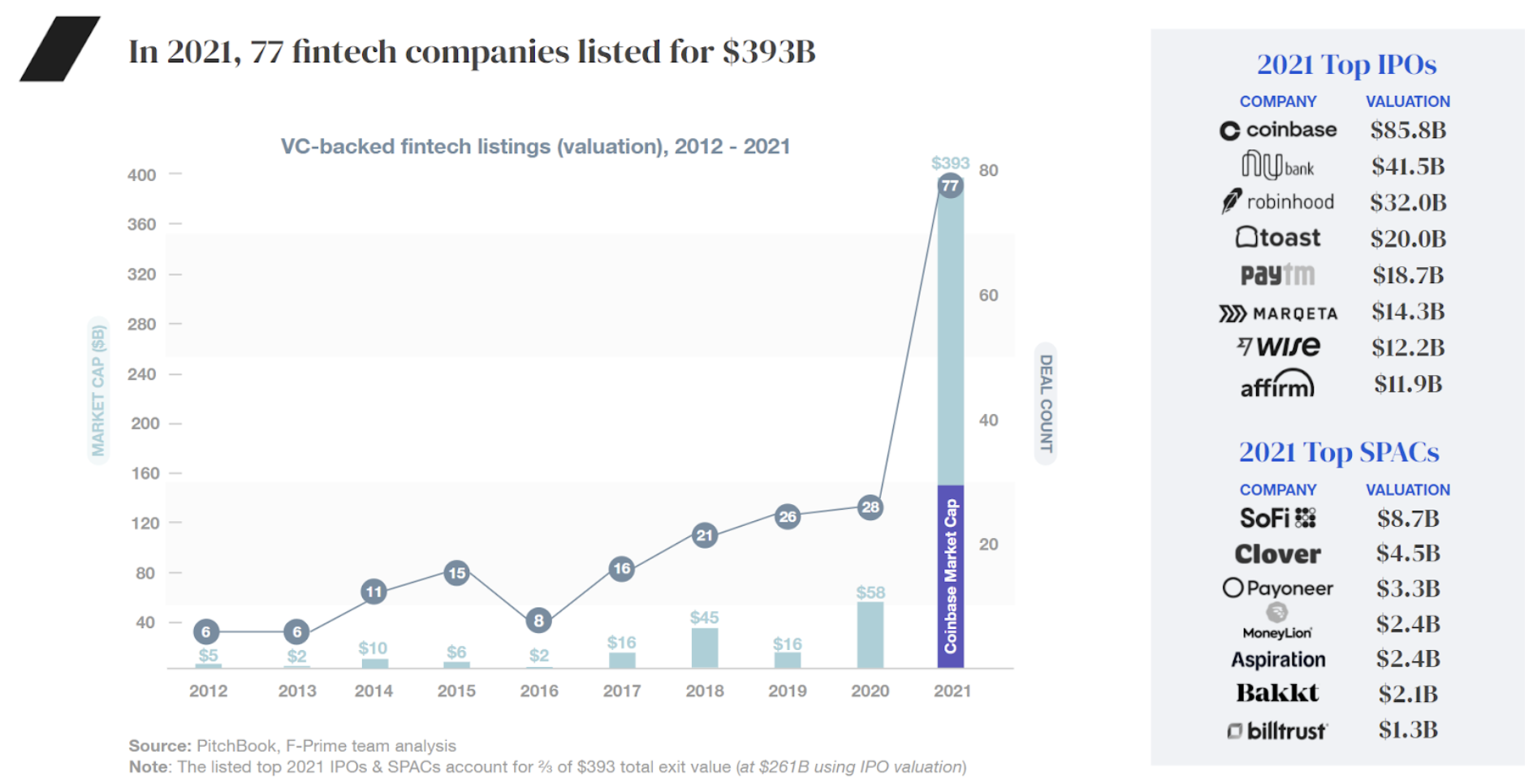
Perhaps the most exciting news for the industry is that we are finally seeing fintech companies exit with increasing velocity. In 2021, there were a record 77 fintech companies that listed for over $393B. Eight of the ten largest fintech exits in history took place in 2021, and public fintech companies have surpassed $1.3 trillion in market cap. For the first time since working in fintech, we have enough public fintech companies to create a meaningful tracking index.


Today, we are excited to reveal the F-Prime Fintech Index. The F-Prime Fintech Index is composed of publicly traded companies powering the disruption of financial services. It features fintech companies listed after 2000 that meet our criteria for market capitalization, revenue growth, listing exchange, and daily trading volumes. For a complete description of our methodology, please visit the F-Prime Fintech Index website. The F-Prime Fintech Index companies trade at 11x average revenue multiples and have realized 62% average annual revenue growth. The F-Prime Fintech Index will enable all of us to benchmark the development of this rapidly-maturing sector and closely track the leading disruptors.

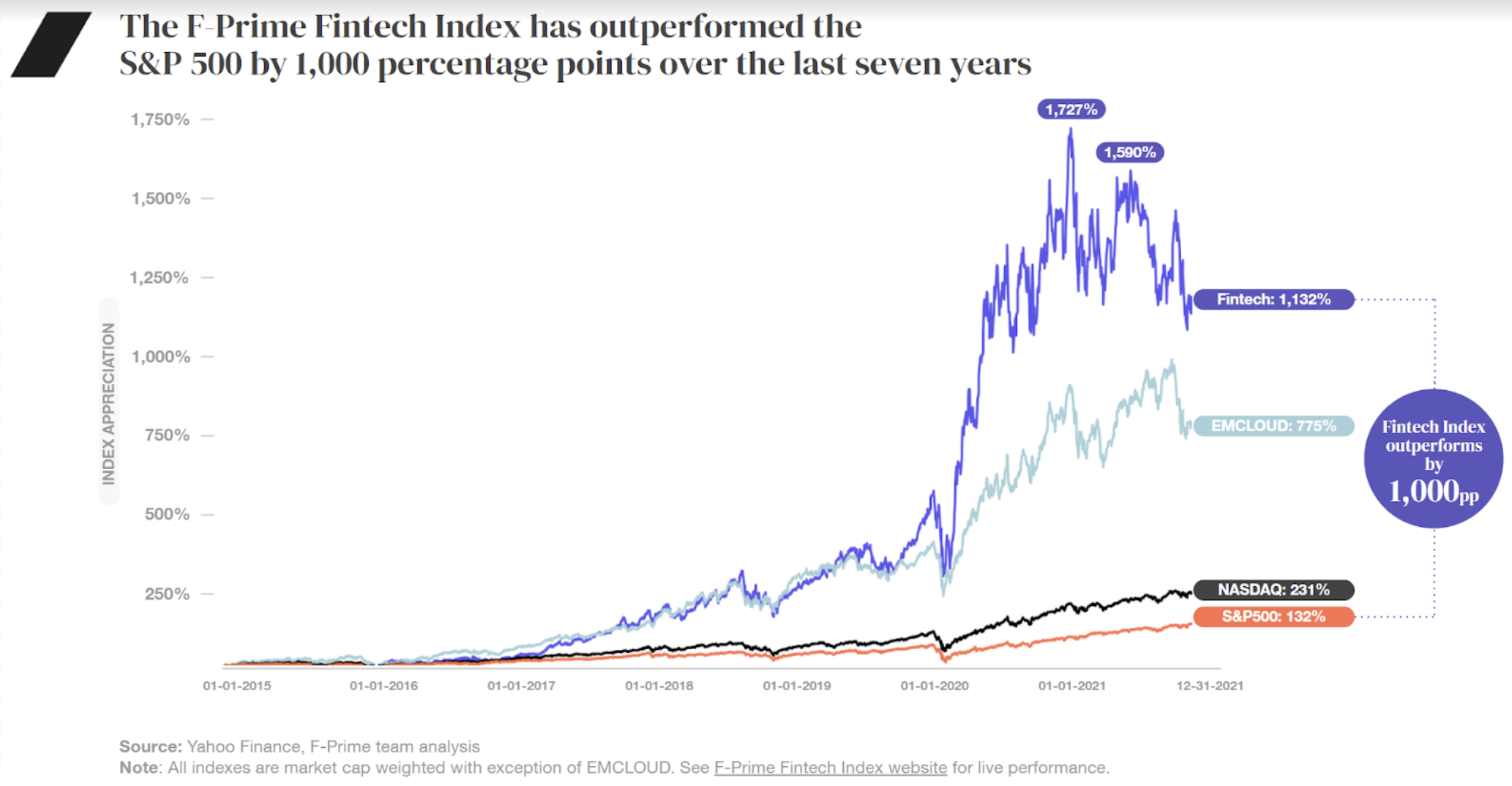
The F-Prime Fintech Index has surged 1,132% since 2015 when three leading companies (Block fka Square, Shopify, and PayPal) were listed. This gain compares favorably with the NASDAQ Index, up 223%, and the S&P 500, up 119% in the same period. The F-Prime Fintech Index has outperformed the S&P 500 and the NASDAQ by nearly 1,000% and 900%, respectively.


Tracking the State of Fintech

To accompany the launch of the F-Prime Fintech Index, we have also published a State of Fintech report. This report details the drivers of the disruption and depicts the striking advances made by fintech startups. Today we have published an overview of the industry and a deep dive into the payments and banking sectors. Soon, we will release an analysis of other sectors, including insurtech, asset management, crypto, proptech, and more.


Fintech has become one of the most significant segments in tech venture capital over the past five years, rising to nearly 35% of total tech venture funding in 2021, up from 11% in 2011. In 2021, fintech funding hit unprecedented levels, nearly tripling the 2020 value of $44 billion. The sector has surpassed the $100 billion+ funding mark in a single year for the first time and is increasingly going global.


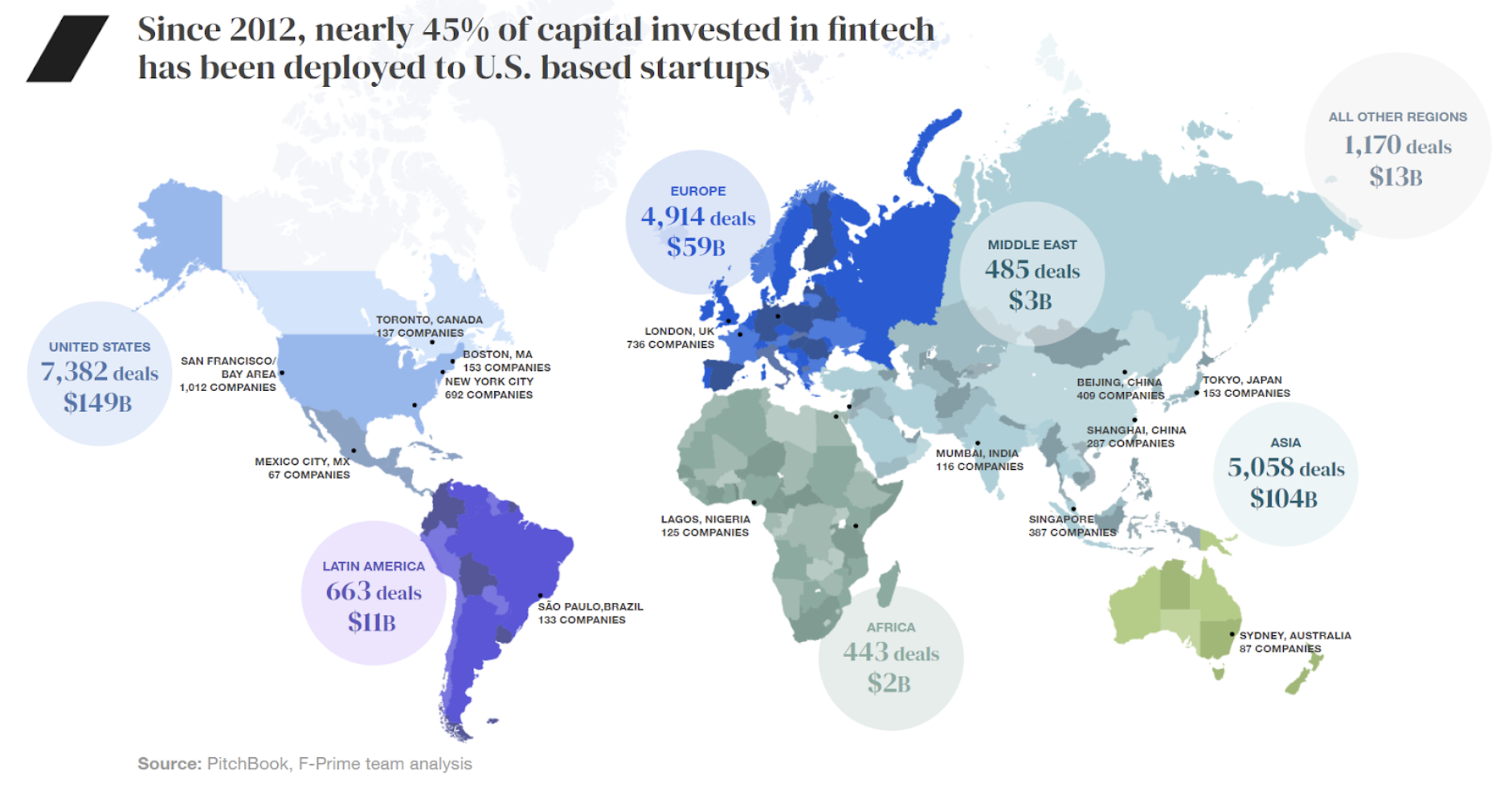
There have been many forces fueling the growth in fintech funding. Some growth is simply a function of early startups raising larger, later-stage rounds with private capital markets ready to provide capital. In 2021, a record 312 deals fetched $100 million+ or more and fueled the creation of 157 new fintech unicorns. Globalization is another factor as fintech companies in Europe, Latin America, Africa, South East Asia & India follow early successes in the U.S. and China. Covid plays its role, providing a strong tailwind behind consumer adoption of digital payments, banking, and commerce.

However, a more profound explanation is that the early startups that did the heavy lifting of building API-first financial infrastructure laid the foundation for future startups to launch financial services faster and at lower costs. Thanks to companies like Marqeta, Plaid/Quovo (an F-Prime portfolio company), and SynapseFi, it has never been easier to launch a fintech company or embed financial services in non-fintech offerings. Indeed, as financial services have been digitized and embedded into other offerings, the very definition of fintech has expanded to include software vendors to hospitals, travel agencies, hotels, and restaurants.

Nowhere has disruption been more sweeping than in payments — the primary driver of fintech growth. Payments startups have attracted more than $118 billion in investments over the past decade. Natively digital payment processors like Paypal, Block, Stripe, and Adyen have captured a 32% share of total U.S. digital payments volume.

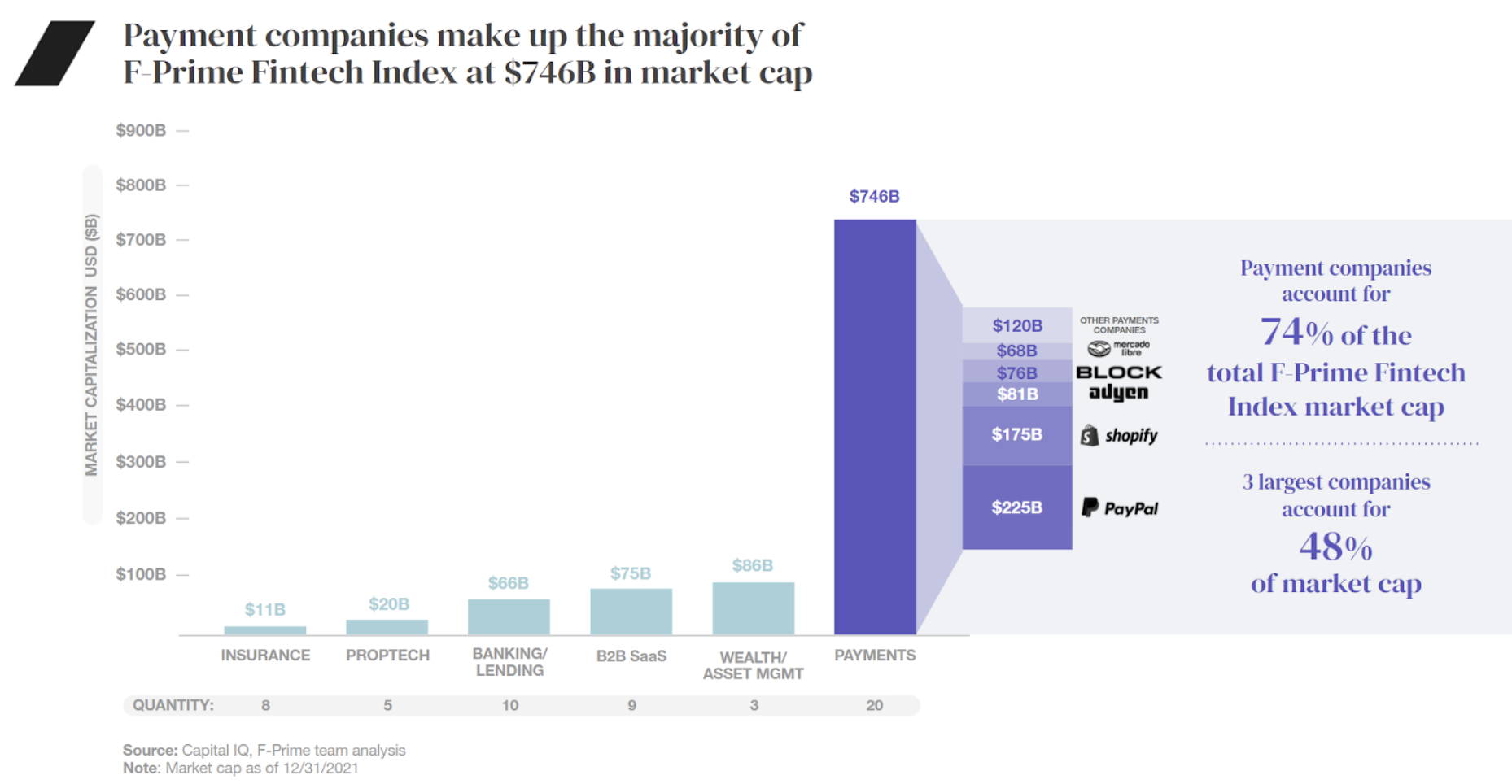
 The digitization of payments has led to a new class of software-first payments companies adding other financial products to their platforms. Public markets have rewarded these high-performing payments players with high valuations. Leading payment disruptors accounted for 74% of the F-Prime Fintech Index by market cap as of Q3 2021.


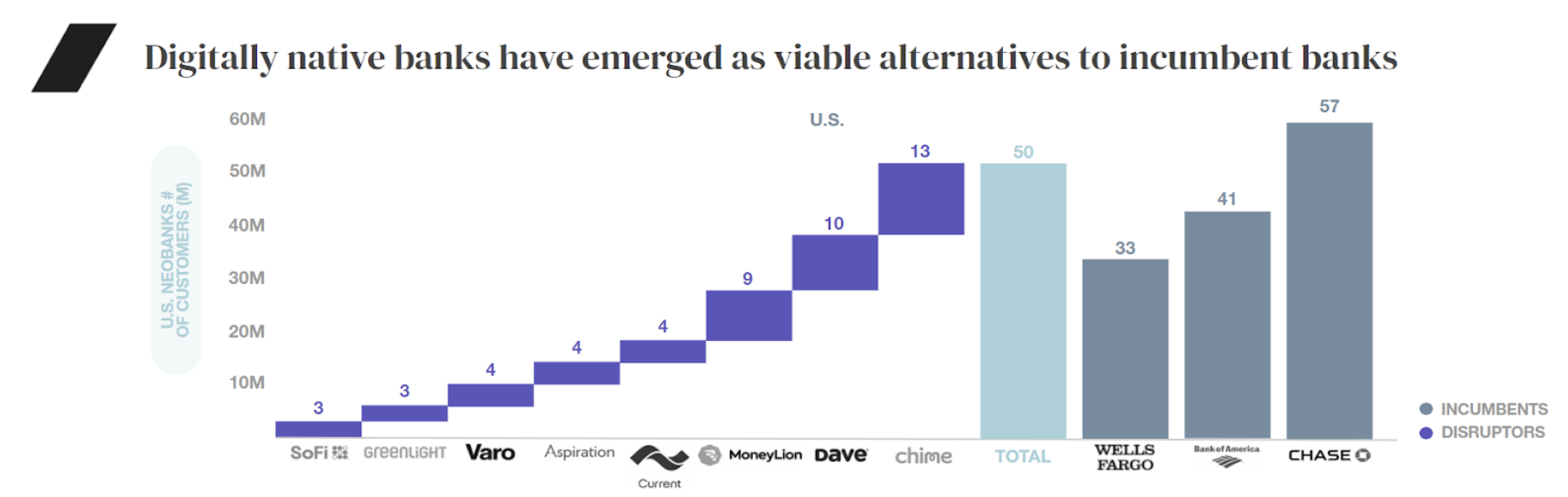
Akin to the rapid adoption of digital payments, we are seeing an acceleration of digital banking adoption spurred by the pandemic. This trend has fueled the rise of a new class of digital native banks or neobanks which have emerged as viable alternatives to large-scale banking institutions.

Consumers are attracted to neobanks by the digital experience, fee transparency, and novel features such as early-deposit access, overdraft protection, and multi-currency cards. Interestingly, many of the top neobanks did not start as banks but led with consumer-friendly services that leveraged a customer’s existing bank account.

While digital banks are still small by assets, they have attractive unit economics (low acquisition costs, growing revenue per user) plus efficient hyper-growth. Given their customer profile, they have significant room to increase their revenue base over their customers’ lifetime.

The rise of neobanks and gains by megabanks has ultimately squeezed regional and community banks, which have seen a 27 percentage point drop in new account openings since 2017. In response, many are increasingly collaborating with fintechs to accelerate their digitalization and personalization capabilities. And in turn, fintechs are leveraging the bank partner’s charter and earned reputation to accelerate their growth. We anticipate seeing more banking-Fintech collaborations to accelerate bank transformation, especially for regional/community banks and credit unions.

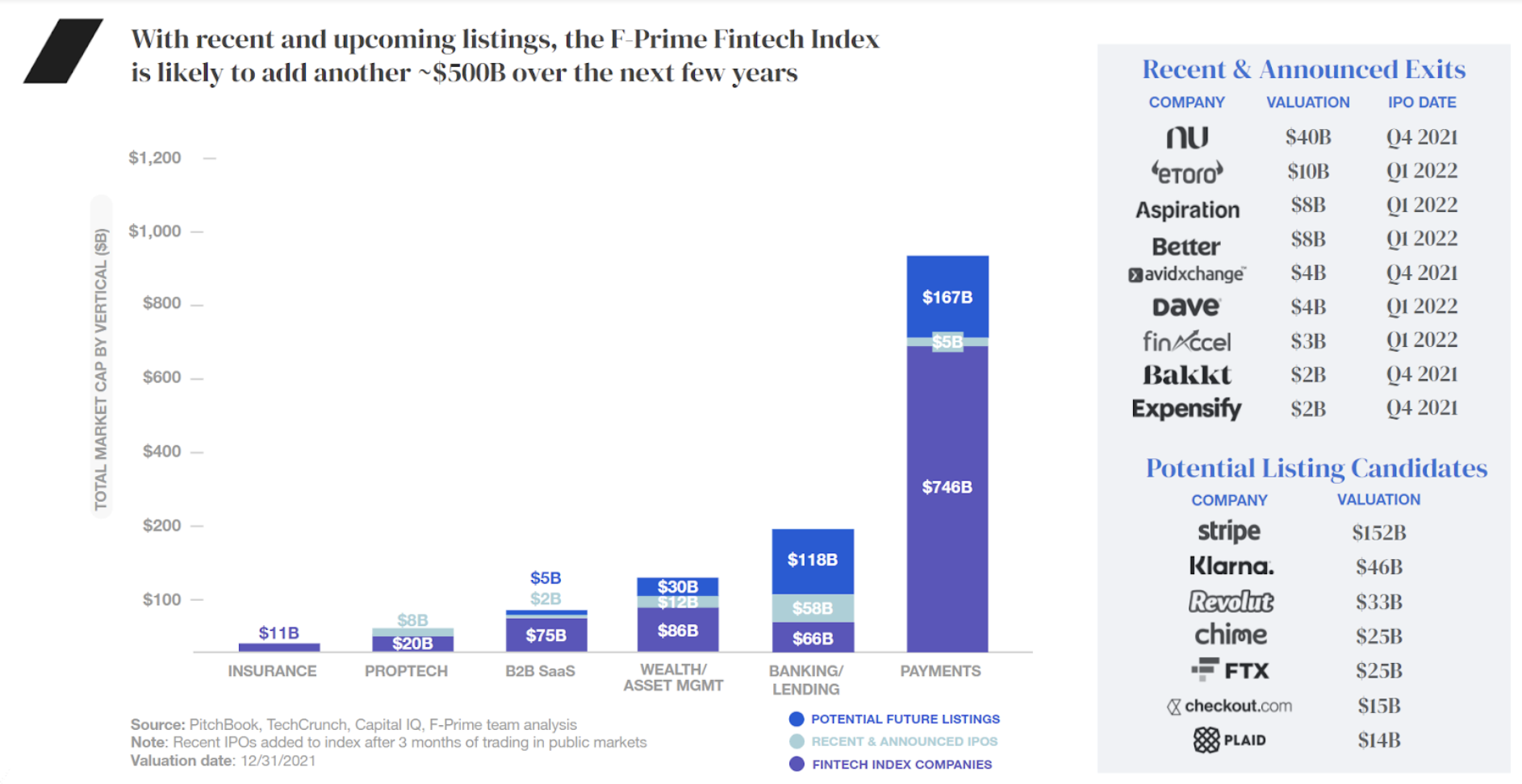
The fintech market is unlikely to cool soon – there are over 200 private fintech unicorns ($1 billion-plus valuation) globally – many of which have already filed to go public in the coming quarter or two.  We will use the F-Prime Fintech Index to track the performance of these companies in capital markets and anticipate adding nearly $500B to the index over the coming few years as fintech companies list.


Despite their remarkable rise, venture-backed fintech startups have also collectively captured ~10% or less of the financial industry revenue with plenty of room for growth.

Read F-Prime Capital’s State of Fintech report and visit the F-Prime Fintech Index website for more information. We welcome feedback and thoughts from the Fintech community as we continue to refine the Index. To reach the F-Prime Fintech Index team, email us and follow our Twitter/Linkedin to stay updated and join a future discussion.
K36 Therapeutics: Advancing a first-in-class MMSET inhibitor to benefit t(4;14) multiple myeloma patients and beyond.

F-Prime has long been interested in precision medicine approaches that tackle the underlying cause of diseases, ranging from investments in small molecules (e.g., Blueprint Medicines) to gene editing technologies (e.g., Beam Therapeutics).

In 2020, we developed an interest in the epigenetic modulation of oncogenic pathways and came across a small molecule inhibitor of MMSET, known as KTX-1001. MMSET is a histone methyltransferase that is overexpressed due to the t(4;14) translocation that is present in up to 20% of multiple myeloma patients.  This target has been highly evasive, with several companies trying and failing to develop a direct inhibitor. When we learned that there was a first-in-class, selective MMSET inhibitor available for licensing, we saw a unique opportunity to build a company dedicated to advancing drugs against MMSET, and potentially other similarly compelling epigenetic targets in cancer.

We found partners early on that were similarly eager to help build and ensure the long-term success of the company, including Atlas Venture and academic thought leaders in methyltransferase biology such as Or Gozani, MD, PhD, Professor of Biology at Stanford University. Our sister fund, Eight Roads Ventures, also joined the syndicate. K36 recently emerged from stealth with experienced biotech executive Terry Connolly leading the company as CEO, and industry veteran Lori Kunkel, MD, joining the Board of Directors. With the $30M Series A financing, co-led by F-Prime, K36 is well positioned to progress KTX-1001 through the clinic and plans to submit an IND for KTX-1001 in the first half of 2022.


“From the beginning, F-Prime championed/advocated the founding of our company. F-Prime partner and K36 board member, Chong Xu, PhD, helped negotiate the license and assembled the Scientific Advisory Board. Together, we work to put precision medicine on the forefront to help patients.”

Terry Connolly, PhD, CEO


While we are fortunate to have many more available therapeutic options for multiple myeloma patients today, the t(4;14) translocation is classified as a high risk genetic alteration and is associated with a poorer prognosis. We believe that direct MMSET inhibition represents a promising new modality that can benefit this population of multiple myeloma patients. This is a great opportunity and we are very proud to support K36 on its mission to develop small molecule epigenetic modulators and breakthrough precision medicines that address the unmet medical needs of cancer patients worldwide.

Pioneering genetic therapies for neurodegenerative disease

Neurological disease remains the largest cause of disability and second leading cause of mortality, worldwide, but life-changing therapies could be on the horizon.

Back in December 2018, we had the pleasure of sitting down with leading neurologist and neuroscientist Professor Christopher Shaw, molecular neurobiologist Dr. Youn Bok Lee and vector biologist Dr. Do Young Lee, the driving forces behind AviadoBio’s science, to learn more about their vision to develop transformative gene therapies for neurological disorders like frontotemporal dementia and ALS. Dr. Shaw described the remarkable genetic discoveries his team had uncovered in his lab at King’s College London and the journey that led them to develop the technology that inspired us to build a company around the promise we saw. The improved understanding of the genetic and pathological underpinnings of these neurodegenerative diseases and emerging clinical efficacy from use of targeted therapies in neurology have driven an increased interest in genetic medicines for these diseases – as well as a deeper understanding of key challenges in CNS gene therapy such as distribution and delivery.

Company building and incubation is some of the most rewarding work we engage in and, in fact, AviadoBio’s early home was our London office. In its earliest stages, we were delighted to work with Jonathan Jones, part of the founding team of CRISPR Therapeutics, and Graeme Fielder, former Head of Business Development at Audentes, as Entrepreneurs-in-Residence alongside a team of pioneers and experts in neurodegenerative disease, neurosurgery and genetic medicine. In 2021, the company emerged from stealth with former Novartis executive, Lisa Deschamps, joining as CEO and an $80 million Series A financing.


“F-Prime believed in AviadoBio’s promise and supported us by providing a management team, a generous workspace and the finances needed to advance. Their commitment led us from a scientific concept and personal passion to a potential reality of hope for patients in less than 3 years!”

Lisa Deschamps, CEO


Although we have seen an unparalleled pace of development for a wide range of diseases and a record number of drugs being approved by the FDA over the last several years, there have been some disease areas that have shown little progress. One of those is the challenging disease space of neurodegenerative disorders where there are limited treatment options for patients and major obstacles during the drug development process.

At F-Prime, we remain optimistic that we could be at the forefront of a breakthrough because of companies like AviadoBio.

Hone: HR’s Secret Weapon

Across every sector and every geography, the teams that attract and retain the strongest talent are the ones that ultimately win.

Reading the headlines you’ll see no shortage of well-capitalized startups seemingly poised for growth. Yet in boom times and bust, one common thread has always connected the very best companies: talent. Across every sector and every geography, the teams that attract and retain the strongest talent are the ones that ultimately win.

Given the importance of recruiting, it has been rewarding to see so many startups tackle talent acquisition. Yet retention, equally as important, has typically been under-served by the startup market, which is suffering from a historically tight labor market and a Covid-inspired “Great Resignation” leading millions of workers to leave their jobs. In fact, 55 percent of Americans expect to look for a new job in the coming year.

Enter Hone, the company providing live, cohort-based management and leadership training that teams love.


During the pandemic, consumers and professionals have come to rely on high-quality digital experiences, such as Peloton for fitness, Zoom for video-based meetings and Outschool and Coursera for education. Hone epitomizes the next evolution in employee education tools that leverage the kinds of digital experiences we’ve come to expect in the post-Covid era. In short, they’re building the next generation employee engagement, training, and retention tools–the kind of technology today’s employers and employees need–to usher in the future of work.

There’s an old adage that people don’t quit jobs; they quit bosses, and the data proves it out. 94% of employees say they would remain with one company longer if their employers were more invested in their training and education. And managers, too, feel more engaged when they have room to grow. Managers who have room to learn and grow are 3.5x more likely to be happy and engaged and 3.3x more likely to want to stay at their organization for 2 years. 

Through live, cohort-based training, Hone delivers the tools managers need to increase employee retention. By focusing on the highest-impact competencies for leadership and management and by practicing skills live in cohort-based learning teams, Hone has helped over 11,000 managers across 100+ organizations turn lessons into skills and drive lasting behavioral change. Their 300+ monthly courses include management themes, such as giving feedback that lands and building high-trust relationships, as well as issues relating to DEI, such as managing bias in the workplace, addressing microaggressions on the team and embracing diversity with inclusion.

Most importantly: Hone works. Unlike most e-learning lessons that average 10% completion rates, Hone’s training completion rates are 84%, with 90% of learners demonstrating a lasting behavior change. This shouldn’t be surprising given the caliber of the coaches — on average they score an impressive 4.8/5.0.  HR buyers are happy, too: 89% of pilot programs lead to expansions.


As with any startup, the strength lies in the team, beginning with a strong bench of leaders at the helm. Co-founder and CEO Tom Griffiths was formerly co-founder and Chief Product Officer at gaming unicorn FanDuel. In his capacity at FanDuel, he successfully helped the company pivot from a news surveying app to a multibillion-dollar sports gaming platform earning $150M+ in revenue. Meanwhile, co-founder and Chief Customer Officer Savina Perez is an HR and DEI guru, having led growth at several venture-backed startups and previously served in executive roles at Culture IQ and Curalate. The two united over their passion for training, culture and people and are the perfect duo to help companies upskill and retain their most precious resources: their employees. They have successfully built out a stellar team of 30 members, 50% of whom are female, and 43% of whom are non-white.

We couldn’t be more excited to join Tom, Savina and the rest of the Hone team on their journey to revolutionize employee performance and retention through live, cohort-based leadership and management training. If you think your team could use a boost in employee engagement and retention (and what team can’t?), check out their incredible offerings at Honehq.com.

These Startups Are Helping Employers Prepare for the Post-COVID Workplace

In our post-pandemic lives, we will likely never return to the full level of in-person engagements we relied on before COVID broke out.

Summer is upon us, almost half of America’s adult population is fully vaccinated, and, increasingly, employers are beginning to plan to welcome employees back to the office. Employers are facing a complex new reality in which only some employees return to the office some of the time. As employers prepare for the post-COVID workplace, startups are creating tools to help them establish new work routines that accommodate distributed workforces and leverage our newfound reliance on video.

In a story for VentureBeat, John Lin outlines the post-COVID workplace trends he finds particularly exciting.

Originally published in VentureBeat. Read the full story here.

Healthcare is the next wave of data liberation

At F-Prime, we have been closely involved in the liberation of financial, to the benefit of service providers and consumers alike. In this story for TechCrunch, Carl Byers and David Jegen reflect on how while the winners in healthcare data transformation will look different than they did in the realm of fintech, even as the industry heads toward a similar end state.

Originally published in TechCrunch. Read the full story here.

As COVID-19 rapidly spread across the Commonwealth of Massachusetts, it quickly grew apparent to Boston’s life science community that there was a dire need for efficient, affordable, accessible and equitable testing.

Boston’s life science community needed efficient, affordable, accessible and equitable testing. As a response, Project Beacon was launched.

In collaboration with GV and the Broad Institute, F-Prime launched Project Beacon, a social benefit organization focused on increasing the capacity, availability, accessibility and affordability of COVID-19 testing in Massachusetts. Project Beacon is now a leading testing provider in the Commonwealth. Since October 2020, Project Beacon has worked with the Commonwealth of Massachusetts to create six Regional Express Covid Testing Sites in Massachusetts, as well as support the Commonwealth’s Abbott BinaxNOW and Pooled Testing efforts for K-12 schools.

In March of 2021, we caught up with F-Prime Venture Partner and Project Beacon Executive Director, Muz Mansuri, Ph.D., to get the latest on this bold initiative.

Q: How did Project Beacon get started?

We saw a failure of COVID-19 testing in the Commonwealth and the necessity for someone to step up to meet the need. Boston is an epicenter of biotechnology and life science innovation. As a community of scientists, investors, and researchers, we felt the urge to answer the call. Our founders wanted to provide robust standardized test results with fast turnaround so we could enable people to go back to work and stay at work.

Q: What is the driving force behind the organization?

We are powered by our mission to help the Commonwealth and its residents safely reopen society and return to work, while reducing disparities by ensuring equitable access to testing across Massachusetts. We’ve always had a particular focus on those who cannot access testing or technology.

Q: How is Project Beacon accessible and affordable?

We serve diverse communities throughout Massachusetts and as such, our testing website is translated into at least seven languages. By charging a little more to organizations with the means to pay for testing and by collaborating with vital partners, we’ve been able to offer the Commonwealth the best price in the marketplace.

Q: How many tests has project Beacon provided?

As of the start of March 2021, we’d performed more than 325,000 tests for the Commonwealth in the various Express sites and over 40,000 tests for private employers, schools and vulnerable populations. We are now actively supporting pool testing to get K-12 children back to school. This effort is ramping up quickly.

Q: What was the greatest challenge in starting this initiative?

At the beginning of the pandemic, testing solutions available off the shelf only catered to the top of the market, and as a result, there were inadequate options for those unable to pay. Often, these groups had the highest need. As a technology-driven company, we’ve made higher-end options available to the general public at more affordable prices.

Q: What is your ultimate goal for Project Beacon?

We want to go out of business. Our vision of success is a world in which we no longer serve a purpose, as that means the pandemic will be behind us.

*Project Beacon was acquired by Ginkgo Bioworks in January 2022. Project Beacon has facilitated more than 1.5 million COVID tests since its inception.

“Our goal is to go out of business.”

—Muz Mansuri, Executive Director

Announcing our Investment in ConnexPay

Managing payments on behalf of their customers is essential to powering the best customer experience possible.

If you’ve ever purchased a trip with Booking.com, a gift from Etsy, or insurance from an agent, you’ve experienced the critical role that brokers, agents, marketplaces, and other intermediaries play in our society. Far from being simply middlemen, these intermediaries own the customer relationship and more importantly customer experience, providing essential value to customers such as a brand they trust, price comparison, product recommendation, or simply coordination across multiple parties to simplify the purchase experience.

These groups are massive contributors to the economy — travel agents, freight brokers, and insurance agents alone control over $1.5T of spend in the U.S. — and yet their customer experience often falls short when it comes to managing payments. Right at the point of purchasing, many intermediaries are forced to turn over the customer to the party providing the product or service (e.g. a travel agent passing your credit card details to the hotel or airline for processing), sacrificing control of the customer payment experience at the most critical time and losing the ability to manage refunds, chargebacks or ongoing purchase updates thereafter.

We believe intermediaries are a critical backbone of commerce. Managing payments on behalf of their customers is essential to powering the best customer experience possible. We’re excited to announce our investment in ConnexPay, a company that puts transparency and control of payments back in the hands of these important businesses that own the customer relationship. ConnexPay has built a powerful platform that tackles the infinitely complex problems intermediaries face when it comes to payments — accepting consumer cards, paying suppliers, routing payments intelligently, managing fraud, chargebacks and refunds— and exposes it all with a simple set of APIs.  This elegant and truly end-to-end solution empowers intermediaries to facilitate the payment for their customers by becoming the merchant of record with the flip of a switch, thereby improving profitability, reducing fraud, speeding reconciliation, and removing the need for pre-funded accounts and credit lines.

This problem is particularly apparent in the travel industry, where ConnexPay got started. Online and offline travel agents remain an enormous force in travel, processing ~$740B in total global spend each year. Travel is paid for immediately on booking, yet travel agents and OTAs (Online Travel Agents) typically have a one to two day lag awaiting funds settlement from travelers. Further, agents want control over the customer experience, latitude to negotiate supply in advance from suppliers, and the ability to take commission directly out of the payment flow versus reconciling on the back-end with suppliers. ConnexPay solves all of these problems by helping agents become the merchant of record, supported by its unique solution granting instant funds availability.

Illustrative payment flow for an intermediary with ConnexPay:

It’s an elegant solution, and one which we are especially excited about having long searched for disruptive businesses in travel payments. In the same way our planes aren’t flying any faster than when we were kids, payment tech in travel has hardly evolved to the digital world. From our own portfolio, we’ve seen first hand the incredible value of integrated vertical payments solutions (e.g. Toast, Flywire) and the opportunity for technology disruptors in travel and hospitality (e.g. OTA Insight, Avantstay). Our ongoing search for solutions improving the bewildering, complex world of travel payments led us to ConnexPay.

At the outset of the COVID pandemic, we started talking about investments in terms of scratches and scars. Urban exodus: scratch or scar? Work from home: scratch or scar? Time and again, the travel industry has shown resilience coming out of every existential crisis it has faced, man-made or otherwise. Some might believe global travel will never fully recover; we believe our increasingly globalized world is nowhere near the ceiling on tourism and business travel. With the hopeful news of a COVID-19 vaccine, we like many others are dreaming about life when we can travel once again.


While ConnexPay began in travel, its growth during this challenging period for the industry only strengthened our belief in the value of their solution. We’re equally excited the team is demonstrating success beyond the travel sector and into insurance agencies, freight brokers, and e-commerce marketplaces. We’re especially thrilled to be partnering with ConnexPay Founder and CEO, and payments industry veteran, Bob Kauffman, whose leadership roles at US Bank and Elavon propelled the vision for ConnexPay. Bob has attracted a talented team of payments experts, including JacobBethJulieKunalJudson and many more. Thanks for welcoming F-Prime Capital as part of your story!

Tapping into the future of warehouse robotics — Part 2

Several new or re-imagined robotics categories are seeing significant investor interest and market adoption.

In part 1 of the series, I discussed some of the guiding design principles for the next generation of warehouse robotics start-ups, including scalability, resilience, ease of integration, and ROI. Building on these principles, several new or re-imagined robotics categories are seeing significant investor interest and market adoption. Each category is fundamentally changing how warehouses deliver operational efficiency, invest in technology, and perform workforce planning.

Automated storage and retrieval systems (AS/RS): Supply chains are increasingly being built around local micro-fulfillment centers that ensure faster delivery times and lower-cost operations. This is particularly true in the grocery industry, where delivery times are most critical. These centers often deploy automated storage and retrieval systems that combine high-density goods storage with automated item retrieval using a built-in gantry system. Providers such as Autostore, Attabotics, and Fabric leverage machine learning to deliver higher throughput solutions in a much smaller footprint than traditional AS/RS providers. These solutions are adept at optimizing both the strategy for storing goods and the strategy for retrieving goods to minimize order fulfillment time. For example, Autostore’s Cube Storage Automation System can store up to 15,000 SKUs within 604 square-meters.

Automated guided vehicles (AGVs): Movement of goods between shipping, receiving, and storage locations in warehouse facilities is often enabled by automated guided vehicles. Traditional AGV solutions travel along predefined routes, typically painted lines on the floor. However, newer providers such as Fetch, Vecna, and Otto Motors are leveraging autonomous navigation capability to provide much greater adaptability for changing use cases and routes, resulting in faster deployment time and greater dynamic movement. Fetch has turnkey and extensible systems that safely find, track, and move anything from parts to pallets in warehouses, factories, and distribution centers

Inventory drones: Modern warehouse efficiency requires high-quality data on the movement of goods in and out of the warehouse. Traditional methods of inventory data collection are commonly human-centric and infrequent, leading to errors and limited real-time visibility of what is in a warehouse at any given time. Companies such as Vimaan, GatherFlytbase, and Ware are building autonomous inventory management drones. Gather’s drones can accurately scan and catalog aisles 15x faster than humans, 30x cheaper and with zero downtime.

Parcel-handling Robots: Goods and parcels typically enter and exit a warehouse through a parcel-handling process. Unloading, unpacking and re-loading completed orders into a sortation system or delivery truck are requirements in nearly every distribution facility. Parcel handling is a labor-intensive job with high rates of turnover. Handling larger boxes and packages has a unique set of requirements that companies such as Pickle Robot, Plus One Robotics, and Dexterity are beginning to solve. Advanced technology and motion planning allows these systems to move parcels in production environments, designed to work alongside their human counterparts and operating collaboratively.

Pick-Assist Robots: As the scale of distribution facilities continues to grow, collecting customer orders has become extremely labor-intensive. Workers walk upwards of 10 miles a shift picking items off shelves in the order fulfillment process, expected to collect an order every 33 seconds. Not only is this process highly inefficient, as most of the time is spent walking from location to location, it can also lead to frequent worker injuries. Companies such as Locus Robotics and 6 River Systems are providing robots that replace unproductive walking time with autonomously navigated goods carts. Workers can focus on transferring goods from storage shelves to carts, and the robot does the ‘walking’. Worker productivity is enhanced by 2–3x, reducing dependence on labor and the risk of worker injuries.

Piece-picking Robots: Given the prevalence of the ‘piece-picking’ activity throughout the warehouse, many view this use case as the ‘holy grail’ of warehouse robotics. Order fulfillment requires the handling of individual items at various points of the fulfillment process, ultimately resulting in the packaging of goods in an individualized order. Picking up items and packaging might sound like a trivial task for humans, but it’s deceptively difficult for machines to efficiently calculate how to grab the next “thing.” RightHand Robotics, KindredBerkshire Grey, and Soft Robotics are building robotics solutions leveraging computer vision, machine learning, and special grippers to pick and transfer individual items, often from highly unstructured scenarios — e.g. miscellaneous goods in a storage bin.

Enabling Solutions: Along with various use-case specific offerings, there is also significant innovation around the enabling technologies that will accelerate the deployment of new robotics solutions. Companies like Veo RoboticsScalable RoboticsFreedom Robotics, and Ready Robotics are creating tools to simplify the implementation of customer-specific use cases and are also making it making it easier to deploy solutions that can safely operate in the presence of people.

The pace of automation adoption across the industry is accelerating as offerings reach maturity and buyers feel increased pressure to improve operational efficiency. The global warehouse automation market is already worth over $10 billion today, and it is expected to double in size over the next 5 years as new technologies continue to see adoption. The combination of capabilities and guiding principles will significantly expand the scope of automation available, lower barriers to adoption, and enhance the potential for operational efficiency.